When shopping for furniture, one of the most common questions homeowners ask is:
Should I choose MDF or solid wood?
At first glance, many pieces look nearly identical. Both may have similar finishes, similar colours, and similar styles. But beneath the surface, the material you choose can dramatically impact durability, longevity, maintenance, and long-term value.
So how do you decide between MDF or solid wood furniture?
This comprehensive guide will help you understand:
- What MDF really is
- What qualifies as solid wood
- The durability differences
- Cost comparisons
- Which material works best for beds, dressers, and storage
- How to choose based on your lifestyle and budget
By the end, you’ll know exactly which material fits your needs.
What Is MDF Furniture?
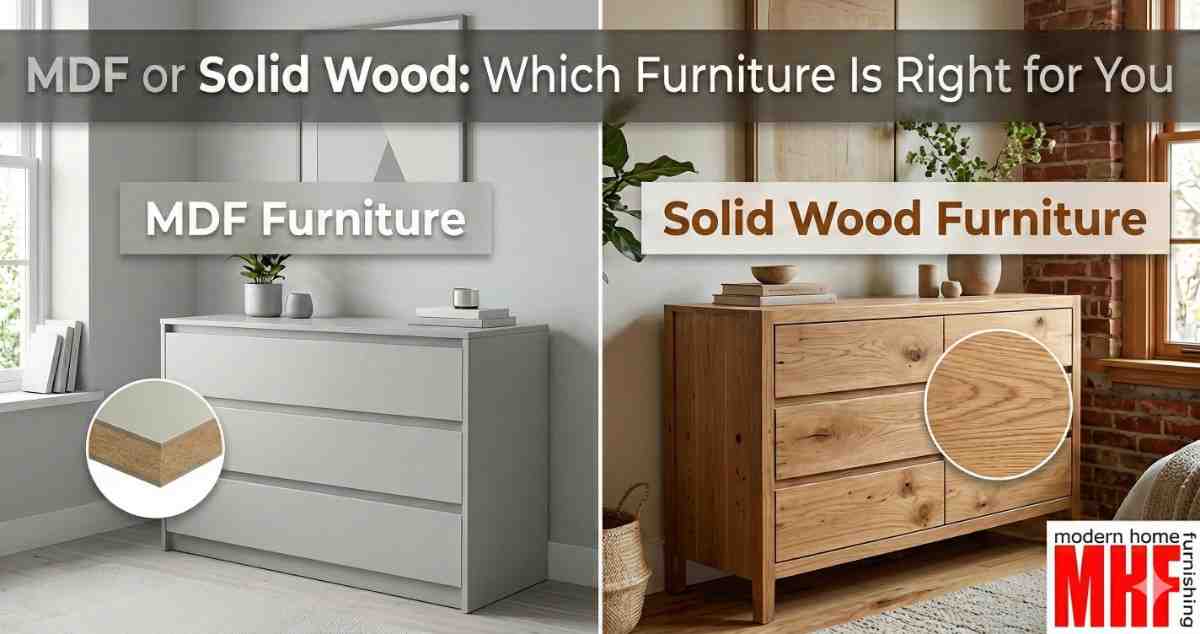
MDF stands for Medium Density Fiberboard. It is a manufactured wood product created by breaking down wood fibers into fine particles, mixing them with resin and wax, and compressing them into dense panels using heat and pressure.
Unlike natural wood, MDF does not have visible grain patterns.
Characteristics of MDF:
- Smooth, uniform surface
- Affordable
- Heavy for its size
- Made using adhesives
- Often covered with laminate, veneer, or paint
MDF is widely used in modern furniture manufacturing because it offers a clean finish at a lower cost.
What Is Solid Wood Furniture?
Solid wood furniture is made entirely from natural lumber cut directly from trees. It maintains its original grain structure, strength, and organic texture.
Common solid wood types include:
- Oak
- Maple
- Walnut
- Ash
- Pine
Characteristics of Solid Wood:
- Natural grain patterns
- Unique variations
- High strength
- Refinishable surfaces
- Long lifespan
Solid wood has been used for centuries in furniture making and remains the gold standard for durability.
MDF vs Solid Wood: The Core Structural Difference
The biggest difference between MDF and solid wood lies inside the material.
Solid Wood
✔ Continuous natural grain
✔ Strong fiber alignment
✔ Naturally durable
✔ Excellent load-bearing capacity
MDF
✔ Compressed wood fibers
✔ No grain structure
✔ Strength depends on density
✔ Less resistant to heavy structural stress
Because solid wood retains natural grain fibers, it distributes weight more effectively — especially important in furniture like beds and dining tables.
Which Is More Durable?
Durability is often the deciding factor when choosing furniture.
Solid Wood Durability
Solid wood can last:
- 20–50 years or more
- Multiple generations with proper care
It resists sagging and maintains structural integrity over time.
It is also:
✔ Refinishable
✔ Repairable
✔ Strong at joints
MDF Durability
MDF typically lasts:
- 5–10 years under moderate use
It can:
✔ Hold up well in light-use furniture
✔ Maintain smooth surfaces
But it may:
❌ Weaken at screw points
❌ Sag under heavy loads
❌ Swell permanently if exposed to moisture
For long-term use, solid wood generally offers superior durability.
Which Is Better for Beds?
Beds experience daily weight and movement.
Solid Wood Beds
✔ Stronger frame support
✔ Less sagging
✔ More stable joints
✔ Longer lifespan
Solid wood is often the preferred choice for master bedrooms and primary residences.
MDF Beds
✔ Lower upfront cost
✔ Lightweight
✔ Suitable for short-term setups
However, MDF beds may loosen at connection points over time, especially under frequent use.
If you’re investing in something you use every night, strength matters.
Which Is Better for Dressers & Storage?
Drawer systems are high-use components.
Solid wood:
✔ Handles drawer weight better
✔ Maintains alignment
✔ Less sagging
MDF:
✔ Works well for lighter storage
✔ More affordable
✔ May weaken around hardware points
If drawers are opened and closed daily, solid wood often provides longer-term reliability.
Moisture & Climate Considerations
In climates like Vancouver and Surrey where humidity fluctuates, moisture performance matters.
Solid Wood
- Expands and contracts naturally
- Performs well in controlled indoor environments
- Can crack if extremely dry but remains structurally strong
MDF
- Highly sensitive to water exposure
- Swells permanently if wet
- Not ideal for damp environments
For long-term durability, especially in bedrooms and living rooms, solid wood is often more forgiving.
Repair & Maintenance
Furniture inevitably experiences wear.
Solid Wood Maintenance
✔ Can be sanded
✔ Can be refinished
✔ Surface scratches repairable
✔ Stains adjustable
Even after years, solid wood can look new again.
MDF Maintenance
❌ Cannot be deeply sanded
❌ Veneer damage is permanent
❌ Water damage irreversible
If long-term maintenance flexibility is important, solid wood offers clear advantages.
Cost Comparison: Upfront vs Long-Term Value
MDF is generally cheaper upfront.
MDF Advantages
✔ Budget-friendly
✔ Good for starter homes
✔ Ideal for rentals
✔ Lower initial investment
Solid Wood Pricing
✔ Higher upfront cost
✔ Longer lifespan
✔ Better resale value
✔ Fewer replacement cycles
Replacing MDF furniture every 8 years may cost more long term than investing in one durable solid wood piece.
Weight & Mobility
Solid wood furniture is heavier.
Pros:
✔ More stable
✔ Feels premium
✔ Less likely to shift
Cons:
- Harder to move
MDF furniture is:
✔ Lighter
✔ Easier to transport
✔ Convenient for renters
If you relocate frequently, MDF may be practical.
Aesthetic Differences
Solid Wood
✔ Natural grain
✔ Unique patterns
✔ Develops richer character over time
✔ Warm, organic look
MDF
✔ Smooth painted finishes
✔ Clean modern style
✔ Uniform appearance
If you love natural wood texture and visible grain, solid wood is the clear winner.
If you prefer sleek painted furniture, MDF can deliver a smooth finish.
Environmental Considerations
Solid Wood
- Renewable when responsibly sourced
- Minimal adhesives
- Biodegradable
MDF
- Efficient use of wood fibers
- Contains resin binders
- Manufacturing involves synthetic adhesives
Sustainability depends on sourcing and production practices.
When MDF Is the Right Choice
Choose MDF if:
✔ You’re furnishing temporarily
✔ Budget is limited
✔ You prefer painted finishes
✔ Furniture won’t bear heavy loads
✔ You’re setting up rental or student housing
MDF provides affordability and accessibility.
When Solid Wood Is Worth It
Choose solid wood if:
✔ You want furniture that lasts decades
✔ You value natural materials
✔ You want repair flexibility
✔ You’re furnishing a primary home
✔ You prefer timeless design
Solid wood offers strength and long-term value that MDF typically cannot match.
How to Decide: Questions to Ask Yourself
Before choosing MDF or solid wood, ask:
- How long do I plan to keep this furniture?
- Is this a primary or temporary residence?
- Will the piece carry heavy weight daily?
- Do I want the option to refinish later?
- Is budget my top priority?
Your answers will guide the right decision.
Final Verdict: MDF or Solid Wood — Which Furniture Is Right for You?
There’s no universal answer — only what aligns with your needs.
Choose MDF if:
- You want affordable, lightweight furniture
- The setup is temporary
- Painted finishes matter most
Choose solid wood if:
- You want durability
- You plan long-term use
- You value repairability
- You prefer natural aesthetics
- You want better resale value
MDF offers convenience and lower cost.
Solid wood offers longevity, strength, and timeless appeal.
When investing in high-use pieces like beds and dressers, solid wood often proves to be the better long-term decision.
When budget flexibility and short-term needs matter most, MDF can serve its purpose well.
The key is choosing furniture that fits not just your space — but your lifestyle and timeline.