When shopping for new furniture, you’ve probably come across product descriptions mentioning MDF, solid wood, or simply “wood construction.” At first glance, they may seem similar — especially when finished with paint or veneer. But in reality, MDF and solid wood are very different materials with distinct strengths, weaknesses, and ideal uses.
So what’s the real difference between MDF vs wood?
Which material lasts longer?
Which is better for beds, dressers, or storage furniture?
And most importantly — which one is right for your home?
This ultimate guide breaks down everything you need to know about MDF vs wood so you can make a confident, informed decision before investing in furniture.
What Is MDF?
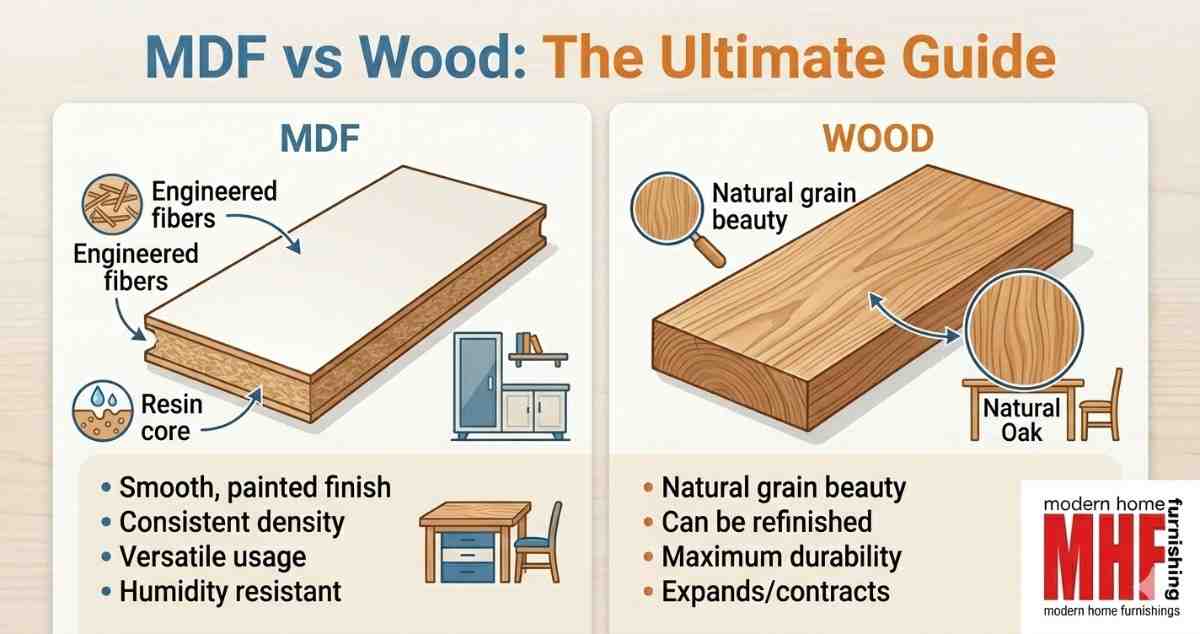
MDF stands for Medium Density Fiberboard. It is a manufactured wood product made by breaking down hardwood or softwood fibers into fine particles, combining them with wax and resin binders, and compressing them into dense panels under heat and pressure.
The result is a smooth, uniform board without visible wood grain.
Key Characteristics of MDF:
- Smooth surface
- Uniform density
- No natural knots or grain
- Made using adhesives and pressure
- Typically covered with paint or laminate
MDF is widely used in modern furniture manufacturing because it is affordable and easy to shape.
What Is Solid Wood?
Solid wood refers to natural lumber cut directly from trees. Unlike MDF, solid wood maintains its natural grain structure and strength.
Common solid wood types include:
- Oak
- Walnut
- Maple
- Ash
- Pine
Solid wood furniture is built from actual wood planks rather than compressed fibers.
Key Characteristics of Solid Wood:
- Natural grain patterns
- Unique variations
- Higher durability
- Strong load-bearing capability
- Refinishable surfaces
Solid wood has been used in furniture making for centuries — and many antique solid wood pieces are still in use today.
MDF vs Wood: Structural Strength Comparison
One of the biggest differences between MDF and wood is structural strength.
Solid Wood Strength
Solid wood has continuous grain fibers that give it exceptional strength. This makes it ideal for:
- Bed frames
- Dining tables
- Heavy dressers
- Structural cabinets
Because the wood fibers run in one direction, solid wood distributes weight evenly and resists bending under pressure.
MDF Strength
MDF is dense but not as structurally strong as solid wood. It:
- Does not have natural grain
- Can weaken at screw points
- May sag under heavy weight over time
- Is more brittle under stress
MDF works well for lightweight furniture or decorative pieces but is generally not recommended for high-stress structural applications like long-term bed frames.
Durability: Which Lasts Longer?
If longevity matters to you, this is a critical comparison.
Solid Wood Durability
✔ Can last 20–50 years or more
✔ Can be refinished and restored
✔ Resistant to long-term wear
✔ Maintains strength over decades
Properly maintained solid wood furniture often becomes heirloom-quality.
MDF Durability
✔ Can last 5–10 years under moderate use
✔ Surface damage is difficult to repair
✔ Swells permanently if exposed to moisture
✔ Cannot be deeply sanded or refinished
MDF is durable enough for short- to mid-term use, but it does not offer the same lifespan as solid wood.
Appearance & Aesthetic Differences
Visually, MDF and wood can look similar — especially when painted.
Solid Wood Appearance
✔ Natural grain texture
✔ Unique character in every piece
✔ Warm tones
✔ Develops richer patina over time
No two solid wood pieces are identical.
MDF Appearance
✔ Smooth and uniform
✔ Ideal for painted finishes
✔ No visible knots or grain
✔ Perfect for modern minimalist designs
MDF is excellent for sleek, painted furniture but lacks the natural depth of real wood.
Moisture Resistance & Climate Performance
In climates like Vancouver and Surrey where humidity fluctuates, moisture performance matters.
Solid Wood & Moisture
- Expands and contracts naturally
- Can crack if extremely dry
- Performs well in controlled indoor environments
MDF & Moisture
- Highly sensitive to water exposure
- Swells and weakens permanently when wet
- Not suitable for damp environments
If furniture will be exposed to moisture or spills, solid wood generally handles the situation better long term.
Repair & Maintenance Comparison
Accidents happen — scratches, dents, and wear are inevitable.
Solid Wood Maintenance
✔ Can be sanded
✔ Can be refinished
✔ Surface scratches can be repaired
✔ Stains can be updated
This flexibility greatly extends its lifespan.
MDF Maintenance
❌ Cannot be sanded deeply
❌ Surface veneer damage is permanent
❌ Water damage cannot be reversed
Once damaged, MDF pieces are often replaced rather than repaired.
Cost: Upfront vs Long-Term Value
MDF is typically less expensive than solid wood.
MDF Pricing Advantages
✔ Budget-friendly
✔ Affordable for first-time buyers
✔ Ideal for rental properties
✔ Lower upfront investment
Solid Wood Pricing
✔ Higher initial cost
✔ Long-term value retention
✔ Fewer replacement cycles
If you replace MDF furniture every 8 years, you may spend more over time than buying one durable solid wood piece.
MDF vs Wood for Beds
Beds are one of the most important furniture investments because they support weight daily.
Solid Wood Beds
✔ Stronger joints
✔ Better weight distribution
✔ Less sagging over time
✔ Higher durability
MDF Beds
✔ Lower cost
✔ Lightweight
✔ Suitable for short-term setups
For long-term durability and structural integrity, solid wood beds typically outperform MDF.
MDF vs Wood for Dressers & Storage
Drawer systems experience frequent opening and closing.
Solid wood:
✔ Handles weight better
✔ Maintains alignment
✔ Less sagging
MDF:
✔ Works for lighter storage
✔ More affordable
✔ May weaken at hardware points
If drawers will be heavily used daily, solid wood is often more reliable.
Environmental Considerations
Solid Wood
- Renewable when responsibly sourced
- Contains fewer synthetic adhesives
- Biodegradable
MDF
- Uses wood fibers efficiently
- Contains binding resins
- Manufacturing process includes adhesives
Sustainability depends on sourcing and production methods.
When MDF Makes Sense
MDF can be a smart choice when:
✔ Budget is limited
✔ Furniture is temporary
✔ Painted finish is desired
✔ Lightweight mobility matters
✔ Furnishing rental or student housing
MDF provides accessibility without major upfront investment.
When Solid Wood Is Worth the Investment
Choose solid wood if:
✔ You want decades of durability
✔ You prefer natural materials
✔ You value repairability
✔ You plan long-term use
✔ You want higher resale value
For primary bedrooms, dining areas, and high-use furniture, solid wood often proves to be the stronger long-term choice.
The Ultimate Verdict: MDF vs Wood
The difference between MDF vs wood comes down to:
Strength
Longevity
Repairability
Moisture resistance
Investment value
MDF offers:
- Affordability
- Smooth modern finishes
- Lightweight convenience
Solid wood offers:
- Structural strength
- Long lifespan
- Timeless appearance
- Refinishing flexibility
- Higher long-term value
If you’re furnishing a temporary space, MDF may meet your needs.
If you’re investing in furniture meant to last, solid wood is typically the smarter long-term decision.
Understanding the material behind the design ensures you choose furniture that aligns with your lifestyle, budget, and long-term expectations.